
Boxing gloves vs MMA gloves for women: what actually differs, why the padding matters, and which pair protects your hands for bag work, sparring, and classes.
If you have ever browsed for training gear, you have probably hit the same wall a lot of women do: boxing gloves and MMA gloves sit right next to each other, sometimes at similar prices, and it is not obvious why you would pick one over the other. They both go on your hands. They both say "fight sport" in bold letters. So does it really matter? When it comes to boxing gloves vs MMA gloves, the short answer is yes, it matters a lot, and choosing the wrong pair can leave your knuckles and wrists paying for it.
Here is the good news: once you understand what each glove is actually built to do, the choice becomes obvious in about thirty seconds. This guide breaks down the real differences, who each style is for, and how to make sure whatever you buy is built for a woman's hand instead of a shrunk-down men's design.
Boxing gloves vs MMA gloves: the core difference
The single biggest difference between the two is what they are designed to let you do with your hands.
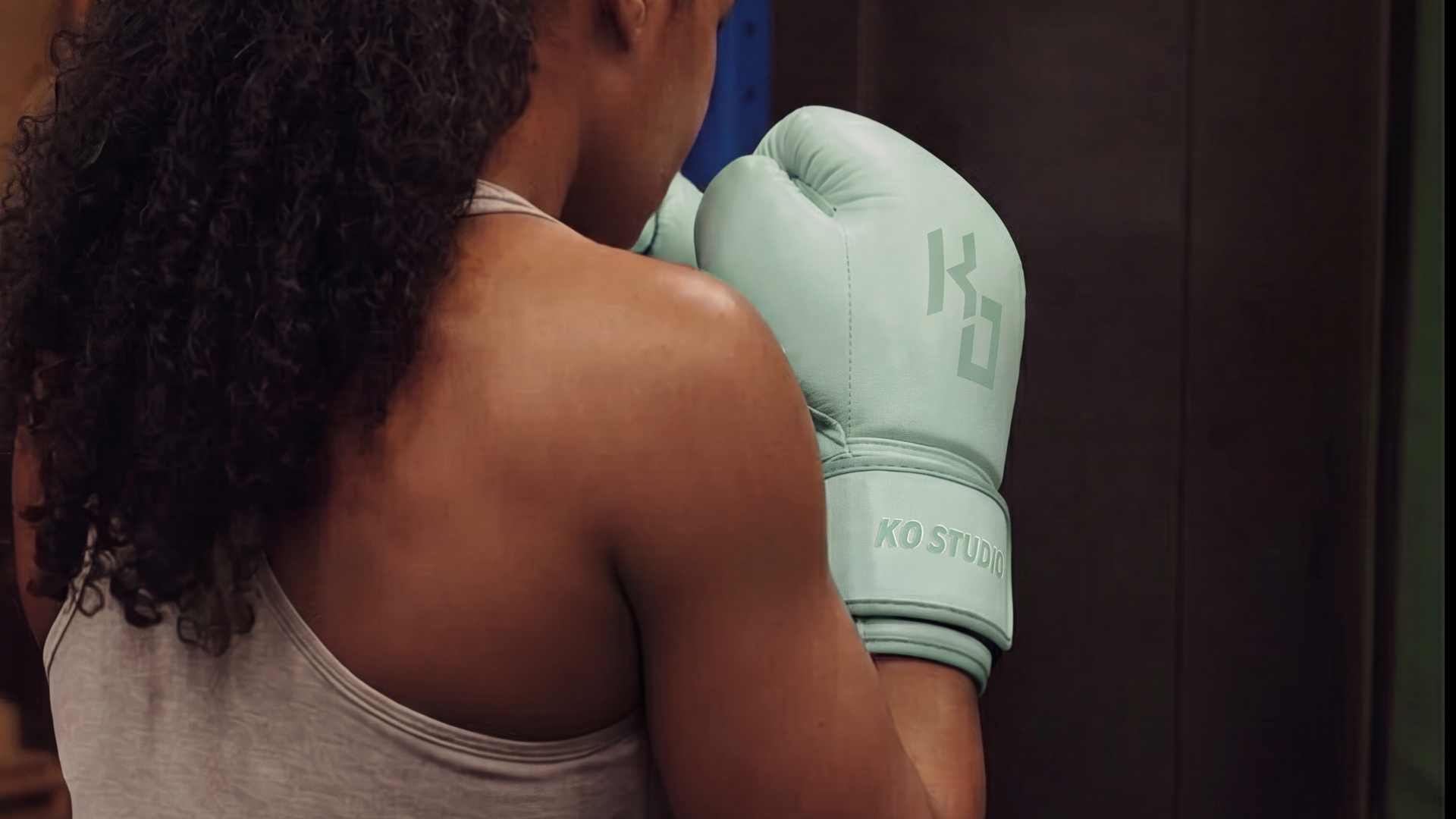
Boxing gloves are closed, heavily padded mitts. Your fingers curl into a single compartment, your thumb tucks alongside, and a thick layer of foam wraps the whole front of your fist. You cannot grab, grip, or open your hand. That is intentional. Boxing is built entirely around punching, so the glove maximizes cushioning and knuckle protection for hundreds of impacts per session.
MMA gloves are small, open-fingered, and lightly padded, usually four to seven ounces. Your fingers stick out, your palm is exposed, and you can open your hand to grip, clinch, grapple, and defend takedowns. The trade-off is obvious the moment you hit something hard: there is far less foam between your knuckles and the target, because MMA gloves were never meant for high-volume punching on a heavy bag.
So the real question is not "which glove is better," it is "what are you actually training?" If your answer is boxing, kickboxing, or any striking-focused fitness class, you want boxing gloves, full stop.
Why padding and weight matter more than you think
Weight is where a lot of women get tripped up. MMA gloves are lighter, and lighter can sound like a selling point, especially if you have smaller hands and dislike feeling like you are swinging oven mitts. But in striking, weight equals protection.
A 12 or 14 ounce boxing glove spreads the force of each punch across a thick foam core, which protects both your knuckles and your wrist. Over a 30 to 45 minute session on the bag or the pads, that cushioning is the difference between hands that feel great tomorrow and hands that feel bruised. A 6 ounce MMA glove gives you almost none of that. Throw a hundred hard hooks in an MMA glove and your knuckles will let you know.
Padding also affects your technique. When your hands are properly protected, you commit to your punches with confidence. When they are not, your body instinctively pulls power to protect itself, and you end up training tentative, half-speed strikes. If your goal is a real workout, better conditioning, or genuine skill, boxing gloves let you go all in. You can see the full range of weights and female-fit options in our women's boxing gloves collection, and if you are unsure which ounce is right for you, our boxing glove size guide for women walks through it step by step.
When MMA gloves actually make sense
None of this means MMA gloves are useless. They are the right tool for a very specific job. If you are training mixed martial arts, submission grappling combined with striking, or a class that involves clinching and takedowns, you need your fingers free, and MMA gloves are exactly what the sport requires.
The mistake is using them as an all-purpose glove. Plenty of women buy a single pair of MMA gloves thinking they will cover everything, then wear them for heavy bag rounds because that is what they own. That is when the aches and the wrist strain show up. MMA gloves are for grappling-and-striking hybrid work, not for the kind of punching volume you rack up in a boxing or bag-based fitness class.
If you genuinely cross-train both disciplines, the honest answer is that you will eventually want a pair of each. But if striking is your main thing, and for the vast majority of women getting into boxing for fitness it is, start with boxing gloves and add MMA gloves only if and when a grappling class actually calls for them.
The female-fit factor most brands ignore
Here is a difference that has nothing to do with boxing gloves vs MMA gloves and everything to do with how the gear is designed: most fight gear is built for men's hands and simply offered in smaller sizes. Women's hands are, on average, narrower through the palm with slimmer fingers and thinner wrists. A glove that is technically "small" but shaped for a man's hand leaves your fingers swimming, your fist loose inside the padding, and your wrist unsupported.
A loose glove is not a small problem. If your fist can shift around inside the padding on impact, your knuckles are not landing where the foam is thickest, and your wrist has nothing bracing it. That is how sprains and sore joints happen. A glove built on a female-specific mold hugs a narrower hand, keeps your fist locked in the right position, and wraps the wrist snugly so it stays aligned when you connect.
This is exactly why KO Studio designs gloves and wraps around a woman's hand from the ground up rather than shrinking a men's pattern. When you shop, look for gear that specifically says it is cut for women, not just "available in extra small."
Do not forget your hand wraps
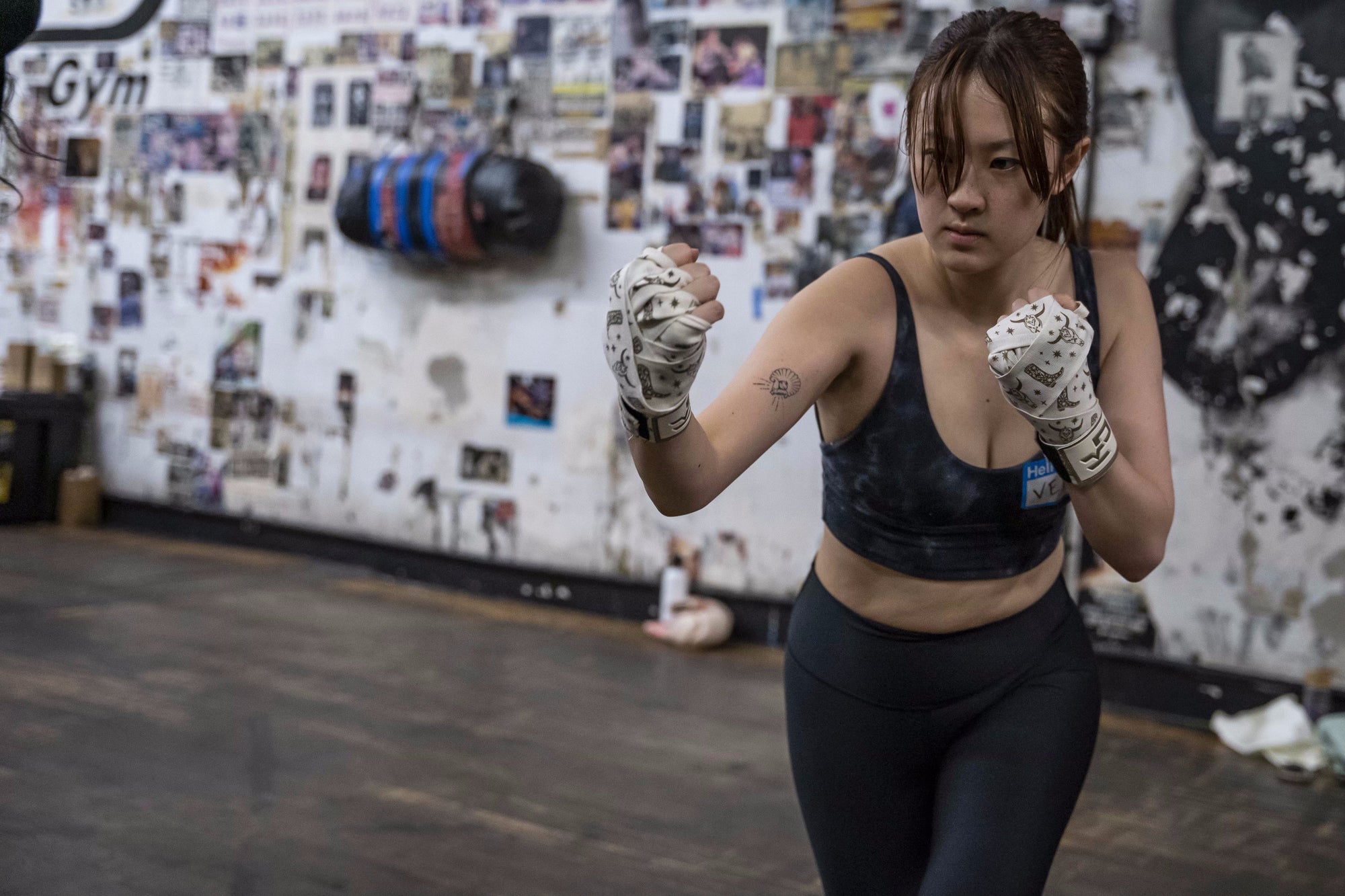
Whichever glove you land on, the layer underneath matters just as much. Hand wraps compress the small bones of your hand, support your wrist, and soak up sweat so your gloves last longer and smell better. Wearing boxing gloves without wraps is like running a marathon in brand-new shoes with no socks. Technically possible, definitely a bad idea.
Wraps are especially important with lighter gloves. If you ever do use MMA-style gloves for striking drills, wraps become non-negotiable because the padding alone will not protect you. Even in a well-padded 14 ounce boxing glove, wraps add the wrist stability that prevents the most common beginner injury. You can find female-fit options in our women's boxing hand wraps collection, and if you are new to wrapping, it is worth learning to do it properly before your first real session.
So which should you buy?
Let the sport decide. If you are boxing, kickboxing, taking bag or pad classes, or working out at home on a heavy bag, buy boxing gloves in a weight that matches your body and your training, most women land around 12 to 14 ounces for bag and pad work. If you are training true mixed martial arts with grappling and clinch work, you need MMA gloves for the hand freedom, and you will likely want boxing gloves too for your striking days.
For nearly everyone starting out in striking for fitness, boxing gloves are the answer, and the confusion around boxing gloves vs MMA gloves usually disappears the moment you feel the difference in padding on your first real combo. Just make sure the pair you choose is built for a woman's hand and paired with proper wraps, and your knuckles and wrists will thank you for years of training to come.
Ready to gear up? Browse the women's boxing gloves collection and grab a matching set of hand wraps so you step into your next class protected, confident, and ready to work.