
Choosing a punching bag for women can feel weirdly overwhelming for something that is, at its core, a big bag you get to hit. Free-standing or hanging? How heavy? Will it wreck your floors, annoy your downstairs neighbour, or turn out to be too light to bother with? If you want to train at home without a gym membership, the bag you pick matters more than almost any other piece of gear you'll buy — so let's make the decision simple.
This is a practical, no-nonsense guide to picking a punching bag for women who train at home, whether you're in a house with a garage to spare or an apartment where every square foot counts. We'll cover the big free-standing-vs-hanging question, what weight actually suits you, the gear you need so you don't hurt your hands, setup basics, and a simple starter routine to get you swinging on day one.
Free-Standing vs Hanging: Which Punching Bag Actually Works at Home
The first fork in the road is the type of bag, and honestly, this is where most people overthink it. There are two main options for home training.
A hanging heavy bag is the classic — a long cylindrical bag suspended from a ceiling mount, wall bracket, or stand. It swings when you hit it, which trains your timing and footwork because you have to move with it. It absorbs power beautifully, so hard hooks and crosses feel satisfying rather than jarring. The catch is installation: you need a solid ceiling joist or a heavy-duty stand, and the swinging motion needs clearance on all sides.
A free-standing bag sits on a weighted base you fill with sand or water. No drilling, no ceiling anchors, no landlord conversations. You can wheel it into a corner when you're done and roll it back out for your next session. The trade-off is that free-standing bags can rock or creep across the floor when you really tee off, and they don't absorb heavy power quite as smoothly as a hung bag.
For most women training at home — especially anyone renting, living in an apartment, or without a garage — a free-standing bag is the more realistic choice. It's the difference between actually training and staring at a bag you never mounted. If you own your space, have a suitable ceiling joist, and know you want to hit hard, a hanging bag is the longer-term upgrade. Either way, you're not making a wrong choice; you're matching the bag to your home.
What Weight and Size Suit Women Training at Home
Bag weight is the spec people fixate on, and there's a simple rule of thumb worth knowing: a heavy bag should weigh roughly half your body weight. So if you weigh 140 lbs, a 70 lb bag is a sensible target; if you're around 120 lbs, look in the 60 lb range.
Why does this matter? A bag that's too light swings wildly, wraps around its chain, and gives you nothing to push against — it feels like hitting a pool noodle. A bag that's far too heavy barely moves and can be hard on your joints when you're still building technique. Matching the weight to your body gives you a bag that moves realistically but still offers resistance.
A few practical notes for home training. If you're a beginner focused on cardio, combinations, and technique rather than raw knockout power, you can size slightly lighter and still get a fantastic workout. For free-standing bags, pay attention to the base capacity — a base you can fill to 250–270 lbs with sand will stay far more stable than a lightly filled one, and sand holds a bag steadier than water. And don't sleep on height: you want the striking surface to cover from roughly your shoulders down to your hips so you can practice both head-level and body shots without stooping.
The Gear You Need So You Don't Hurt Your Hands
Here's the part that too many beginners skip, then regret: a punching bag is firmer than it looks, and your hands and wrists take the impact of every single punch. Training bare-knuckle on a heavy bag is one of the fastest ways to bruise your knuckles, tweak a wrist, or scrape skin — and none of that is a good look two days into your new habit.
You need two things before your first real session. First, hand wraps to compress and support the small bones of your hand and stabilise your wrist. They're the foundation layer, and learning to wrap properly makes an enormous difference to how protected you feel; our essential hand-wrapping guide for women walks you through it step by step. Browse a set that fits your hands in our women's boxing hand wraps collection.
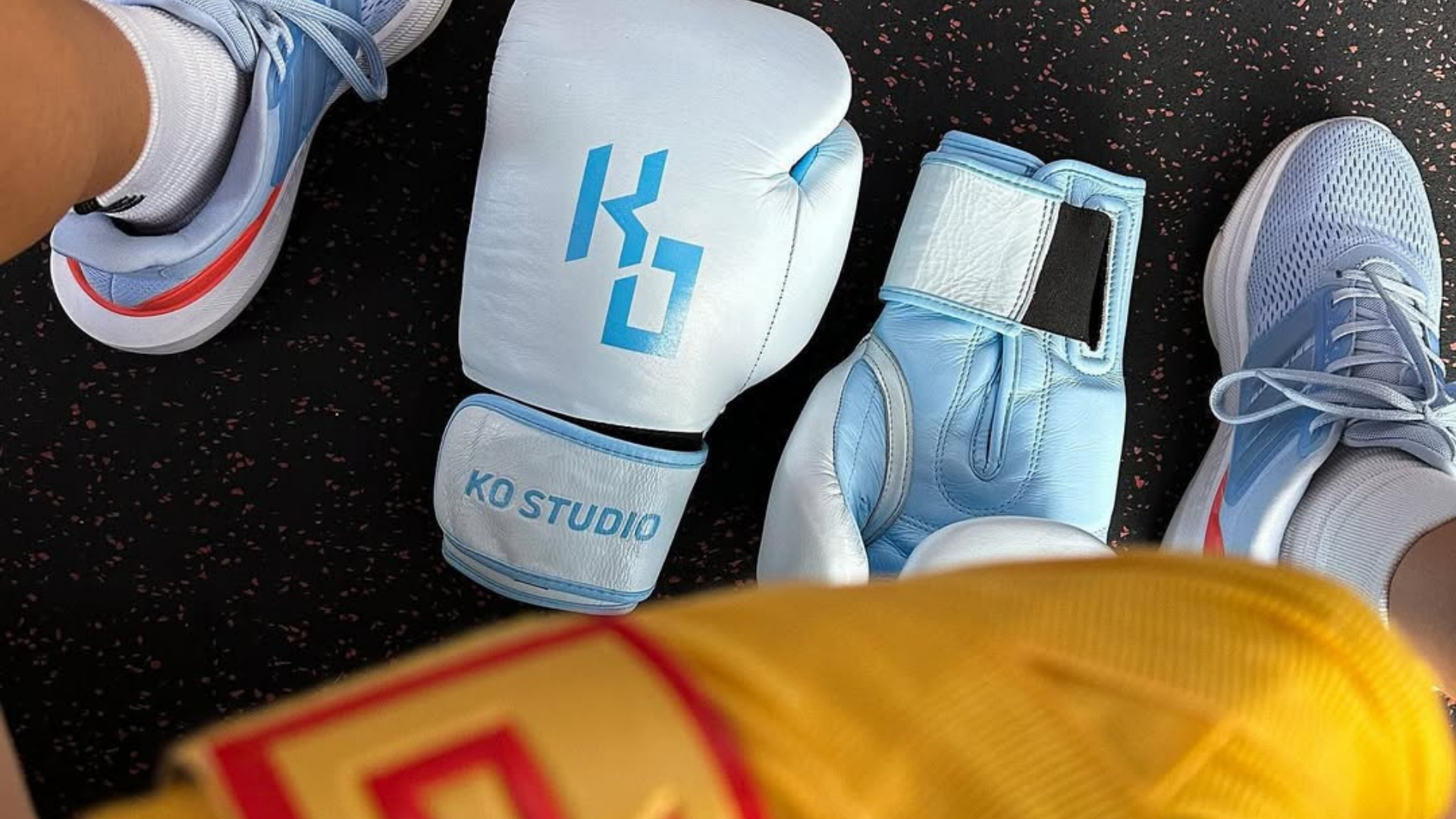
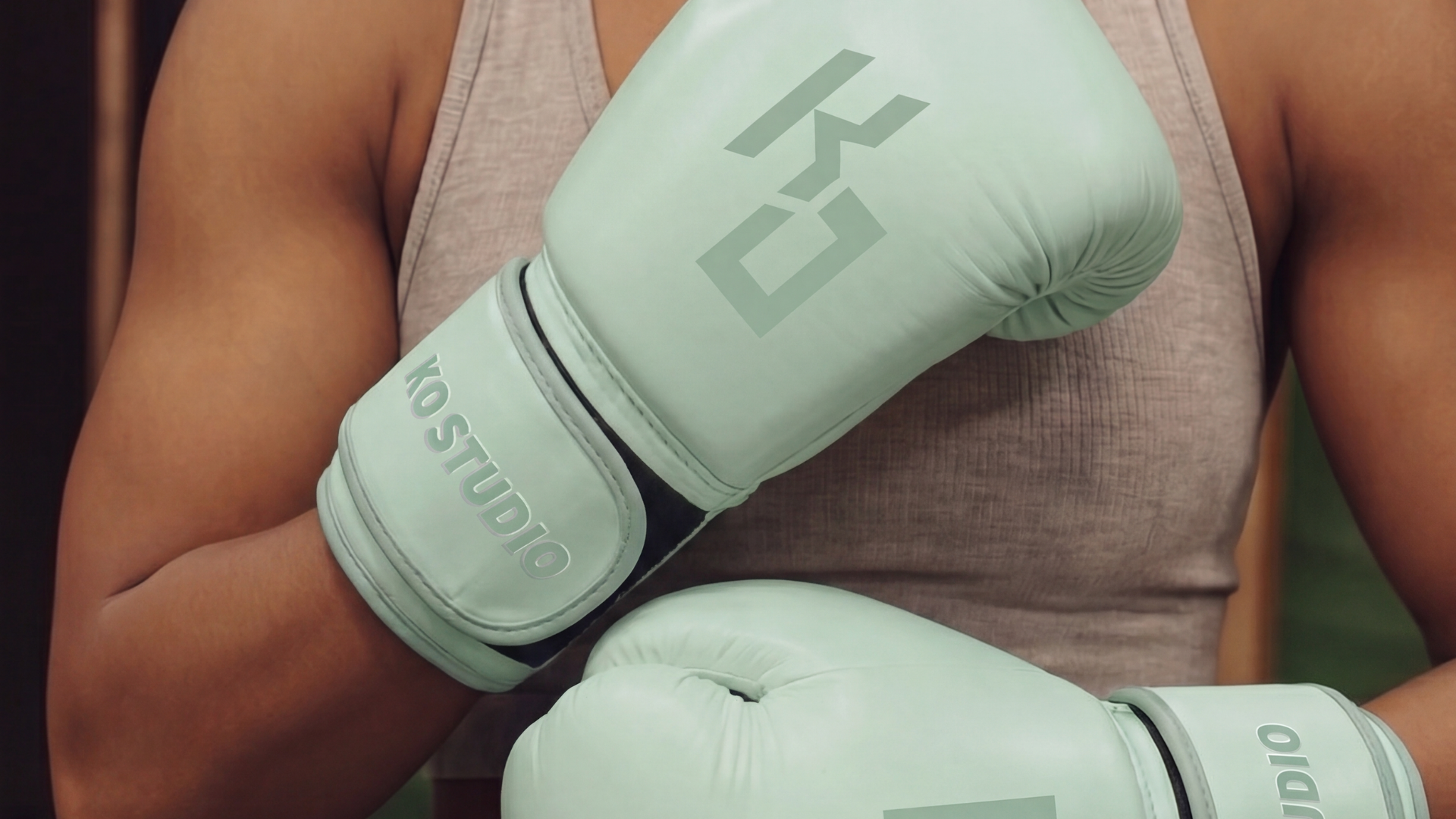
Second, gloves built for bag work. Bag and training gloves have padding designed to protect your knuckles against a firm surface, and a women's-fit glove sits better on a smaller hand than a unisex one that gapes at the wrist. You can find female-fit options in our women's boxing gloves collection. For most home bag training, a 12 oz or 14 oz glove is a solid all-rounder — enough padding to protect you without being so heavy your form falls apart late in a round.
Wrap, glove up, and your hands will thank you for years. Skip it, and you'll learn the hard way why every experienced boxer treats wraps as non-negotiable.
Setup Basics: Mounting, Floor Protection, and Small-Space Tips
Once your punching bag arrives, a little setup thought saves a lot of grief.
For free-standing bags, fill the base fully — sand for maximum stability, or water if you'll need to move it often and drain it. Place it on a rubber gym mat or interlocking foam tiles; this protects your floor, dampens noise, and stops the base from sliding or scratching hardwood. In a small apartment, position the bag near a load-bearing corner and away from anything fragile, and give yourself at least an arm's length of clearance in every direction.
For hanging bags, mount only into a genuine ceiling joist or a properly rated wall bracket — never straight into drywall. If drilling isn't an option, a freestanding heavy-bag stand does the job, though it needs floor space and its own weighted base. Add a spring or shock absorber between the mount and the bag to cut down on the thud that travels through the ceiling.
On noise, which is the number-one apartment worry: matting under the bag, a shock absorber on a hanging setup, and training during reasonable hours handle most of it. Free-standing bags on a thick mat are generally the quietest option for shared walls and floors.
A Simple Starter Home-Bag Routine
You don't need a complicated program to get value out of your bag from day one. Here's a beginner-friendly 20-minute session — wraps on, gloves on, water nearby.
Start with a 3-minute warm-up: light shadowboxing, arm circles, and a bit of footwork to raise your heart rate and loosen your shoulders. Then work three 3-minute rounds with a minute of rest between each. In round one, throw slow, clean jabs and crosses (the classic one-two) and focus purely on landing with your knuckles and turning your hips. In round two, add hooks and keep moving around the bag so it becomes a moving target. In round three, put it together in short combinations — jab, cross, hook — and pick up the pace for the last thirty seconds of each. Finish with a 3-minute cooldown of gentle stretching for your shoulders, wrists, and hips.
Do that two or three times a week and you'll feel fitter, sharper, and noticeably more powerful within a month. As you progress, longer rounds, heavier combinations, and defensive movement all build naturally on this base.
Ready to Start Swinging
Choosing a punching bag for women comes down to a few honest questions: how much space you have, whether you can drill, how hard you want to hit, and how much room your floors and neighbours can spare. Get those right and you've got a home gym that's always open — no queues, no membership, no excuses.
When you're ready to kit out, protect your hands first: pair your bag with proper women's boxing gloves and a good set of hand wraps, and you'll be throwing clean, confident combinations in no time. Your bag is waiting — go hit something.