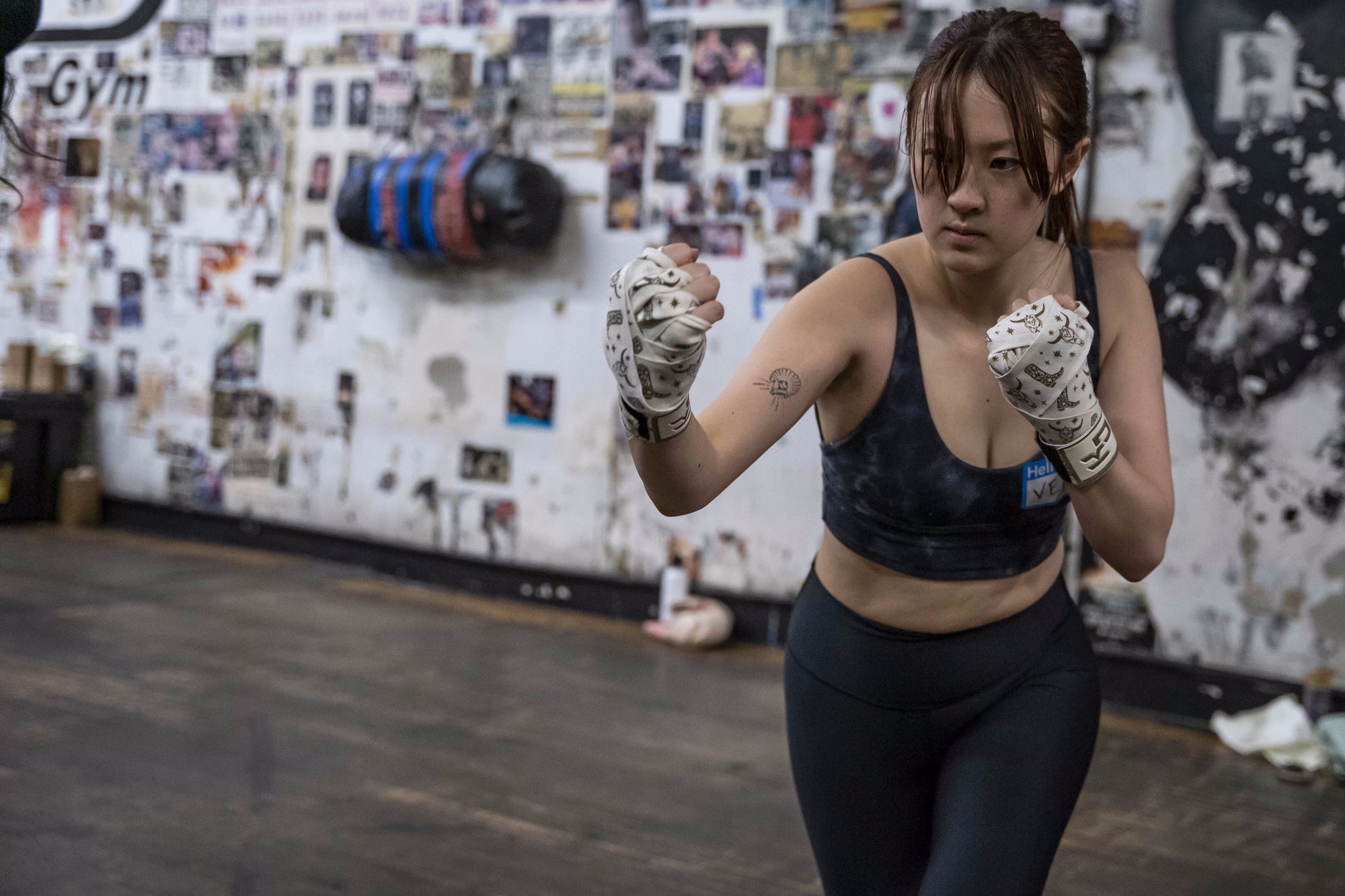
How to Wrap Your Hands for Boxing: A Complete Guide for Women
If you've ever watched a boxer prepare for training, you've seen them carefully wrap their hands before putting on gloves. It looks simple enough — but there's real method behind it. Hand wrapping is one of the most important habits you can build as a female boxer, whether you're hitting the bag for fitness or training to compete.
This guide walks you through exactly how to wrap your hands for boxing, why it matters, and how to choose the right wraps for your hands.
Why Hand Wraps Are Non-Negotiable
Your hands are made up of 27 bones, plus tendons, ligaments, and muscles — all of which take impact every time you throw a punch. Boxing hand wraps hold everything in alignment. They compress the soft tissue around your knuckles, stabilize your wrist, and prevent the small bones in your hand from shifting under impact.
Skipping wraps — even for a "light" session — puts you at real risk of sprains, fractures, and repetitive stress injuries over time. The good news: once wrapping becomes part of your pre-training routine, it takes less than two minutes per hand.
What You Need
Before you start, make sure you have the right wraps:
Length: For most women, 180-inch wraps offer the most coverage and wrist support. If you have smaller hands, 120-inch wraps work, but you'll sacrifice some wrist protection. When in doubt, go longer — you can always use the extra material for an additional pass around your wrist.
Material: Cotton wraps are breathable and washable. Mexican-style wraps (cotton-elastic blend) conform more closely to your hand shape and feel slightly more secure — a great choice for beginners.
Closure: Most wraps use a Velcro closure. Make sure the Velcro lands flat on your wrist at the end — if it's on a bony area or crooked, it'll come loose mid-workout.
Step-by-Step: How to Wrap Your Hands for Boxing
Start with an open hand. Keep your fingers spread wide throughout the entire wrapping process. Wrapping with a closed fist creates a wrap that's too tight when you open your hand and too loose when you make a fist.
Step 1 — Thumb loop. Insert your thumb through the loop at the end of the wrap. The wrap should unroll across the back of your hand, not your palm.
Step 2 — Circle the wrist. Wrap around your wrist 3 times, moving toward your fingers. Keep it snug but not cutting off circulation — you should be able to slip a finger underneath.
Step 3 — Wrap the knuckles. Bring the wrap up and across your knuckles 3 times. Your knuckles should feel padded and secure.
Step 4 — Create the X. Bring the wrap diagonally across the back of your hand down to your wrist, loop around once, then bring it diagonally back up to your knuckles. This X pattern on the back of your hand locks everything in place.
Step 5 — Weave between fingers. Starting from your pinky side, bring the wrap between your pinky and ring finger, loop around your wrist, then between your ring and middle finger, loop again, then between your middle and index finger. This separates and protects each finger individually.
Step 6 — Final pass and close. Wrap around your knuckles once more, then make 1–2 final passes around your wrist. Secure the Velcro flat and centered on your wrist. Done.
Give your hand a fist — it should feel firm and supported, not numb or restricted. If your fingers tingle, unwrap and start over with less tension.
Common Mistakes to Avoid
Wrapping too tight. The most common beginner mistake. Tight wraps feel secure but restrict blood flow, which makes your hands go numb inside your gloves. Snug is the goal.
Skipping the finger weave. It feels tedious, but weaving between fingers is what prevents knuckle injuries during heavy bag work. Don't skip it.
Wrapping on a closed fist. Always wrap with fingers spread. This ensures the wrap has enough give when you form a fist.
Letting Velcro land on bone. If the Velcro lands on the back of your wrist bone, it'll loosen mid-session. Adjust your final passes so it lands on a flat, fleshy area.
Taking Care of Your Hand Wraps
Wraps get sweaty — wash them after every use. Toss them in a mesh laundry bag to prevent tangling, wash on cold, and air dry. Never put wraps in the dryer; the heat destroys the Velcro. After washing, roll them neatly so they're ready for your next session.
Most wraps last 6–12 months with regular use. Replace them when the elastic loses its stretch or the Velcro stops holding.
Ready to Train?
The right hand wraps make a real difference in how protected and confident you feel in every session. At KO Studio, our boxing hand wraps are designed specifically for women — the right length, the right stretch, and built to hold up through serious training. Pair them with our women's boxing gloves for full protection from knuckle to wrist.
Your hands work hard for you. Wrap them right.